Hey there, beer enthusiasts and bar owners! As a supplier of Custom Draft Beer Towers, I've gotten a ton of questions about how the flow rate of these bad boys works. So, I thought I'd break it down for you in a way that's easy to understand, no fancy jargon here!
First off, let's talk about what flow rate actually means. In simple terms, it's how fast the beer comes out of the tap. You know when you're at a bar and you order a beer, and it takes forever to fill your glass? That's a low flow rate. On the other hand, if the beer gushes out too fast and creates a huge head of foam, that's a high flow rate. Finding the sweet spot is crucial for a perfect pour every time.
Now, what affects the flow rate of a custom draft beer tower? Well, there are a few key factors.
Pressure
Pressure is one of the most important factors when it comes to flow rate. Think of it like blowing up a balloon. If you blow too hard, the balloon will pop. If you don't blow hard enough, it won't inflate. The same principle applies to beer flow. In a draft beer system, we use a CO2 tank to create pressure. The higher the pressure, the faster the beer will flow. But if the pressure is too high, it can cause excessive foaming.
Most draft beer systems are set to operate at a pressure between 10 and 15 PSI (pounds per square inch). However, this can vary depending on the type of beer and the length of the beer line. For example, a lighter beer like a pilsner might require less pressure than a heavier beer like a stout. As a supplier, we work with our customers to determine the optimal pressure settings for their specific needs.
Beer Line Length and Diameter
The length and diameter of the beer line also play a big role in flow rate. A longer beer line creates more resistance, which slows down the flow of beer. On the other hand, a wider diameter beer line allows the beer to flow more freely.
When designing a custom draft beer tower, we take into account the layout of the bar and the distance between the keg and the tap. We want to make sure that the beer line is long enough to keep the beer cold but not so long that it affects the flow rate. In general, we recommend using a beer line with a diameter of 3/16 to 1/4 inches.
Temperature
Temperature is another important factor that can affect the flow rate of beer. Beer is more viscous (thicker) at lower temperatures, which means it flows more slowly. That's why it's important to keep the beer at the right temperature. Most draft beer systems are designed to keep the beer between 36 and 38 degrees Fahrenheit.
If the beer is too warm, it can cause excessive foaming and a poor flow rate. On the other hand, if the beer is too cold, it can make it difficult to pour and can also affect the taste of the beer. As a supplier, we offer temperature control options for our custom draft beer towers to ensure that the beer is always at the perfect temperature.
Tap Design
The design of the tap can also have an impact on the flow rate. There are different types of taps available, including standard taps, high-flow taps, and specialty taps. A standard tap is designed to provide a steady, consistent flow of beer. A high-flow tap, on the other hand, is designed to pour beer quickly, which is great for busy bars.
When choosing a tap for a custom draft beer tower, we consider the needs of the customer. If they have a high-volume bar, we might recommend a high-flow tap. If they want a more traditional pour, we might recommend a standard tap. We also offer a variety of tap styles and finishes to match the decor of the bar.
Balancing the System
Once all of these factors are taken into account, the next step is to balance the draft beer system. Balancing the system means adjusting the pressure, beer line length, and tap design to ensure that the beer flows at the right rate with the perfect amount of foam.
This is a crucial step in the installation process, and it requires some expertise. As a supplier, we have a team of experienced technicians who are trained to balance draft beer systems. We use specialized equipment to measure the flow rate and foam levels and make adjustments as needed.
Why Flow Rate Matters
You might be wondering why flow rate is so important. Well, there are a few reasons. First of all, a proper flow rate ensures that the beer is poured correctly. A slow flow rate can lead to a warm, flat beer, while a fast flow rate can cause excessive foaming. Both of these can result in a poor customer experience.
Secondly, a balanced draft beer system can save money. When the beer is poured correctly, there is less waste. Excessive foaming means that you're essentially pouring beer down the drain, which can add up over time. By ensuring that the beer flows at the right rate, you can maximize your profits.
Our 2 Tap Beer Tower
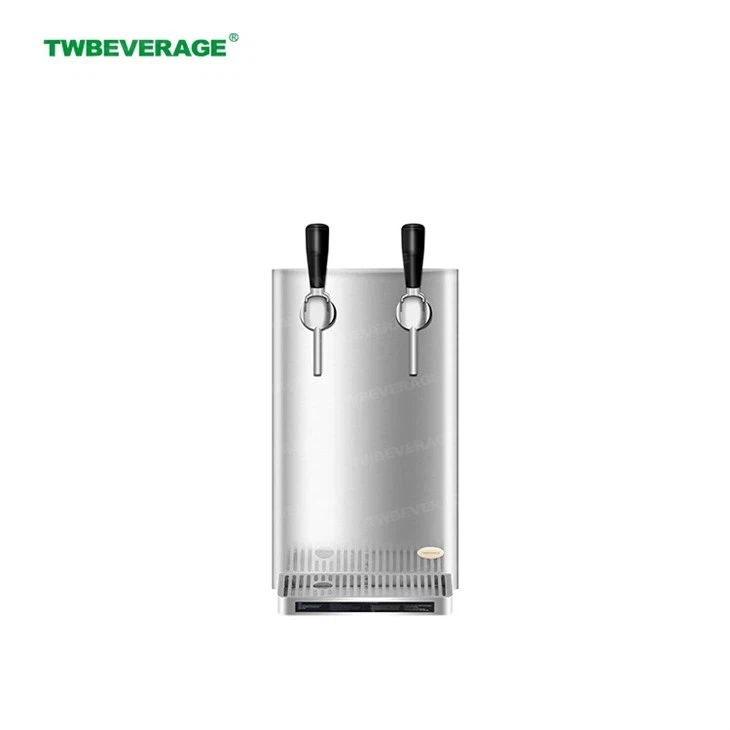
One of our popular products is the 2 Tap Beer Tower. This tower is perfect for small to medium-sized bars or home use. It's designed to provide a consistent flow rate for two different types of beer.


The 2 tap beer tower is made from high-quality materials and is available in a variety of finishes. It comes with all of the necessary components, including taps, beer lines, and a temperature control system. We can also customize the tower to meet your specific needs, such as adding a logo or changing the color.
Conclusion
So, there you have it! That's how the flow rate of a custom draft beer tower works. As you can see, there are several factors that need to be considered, including pressure, beer line length and diameter, temperature, tap design, and system balancing.
If you're in the market for a custom draft beer tower, we'd love to help. We have a team of experts who can work with you to design a system that meets your specific needs and budget. Whether you're a small bar owner or a home brewer, we have the products and expertise to get you pouring the perfect beer every time.
If you have any questions or would like to discuss your options, please don't hesitate to reach out. We're here to help you take your beer service to the next level.
References
- "Beer Draft Systems: A Guide to Installation and Maintenance." Craft Beer & Brewing Magazine.
- "The Science of Draft Beer." American Homebrewers Association.
- "Draft Beer Basics." Brewers Association.